Another Texas summer is coming to an end soon, and despite the scorching temperatures, the electric grid has kept the A/C running. ERCOT didn’t falter when faced with a new all-time peak energy demand record on July 22. But hot, sunny days are only one end of the spectrum.
According to a TPPF/Overton Insights poll released yesterday, a whopping 57.1% of likely Texas voters are either “not too confident” or “not at all confident” in the electric grid’s ability to reliably provide power during extreme cold. When asked about extreme heat, it was a statistical tie, with nearly half of respondents expressing concern.
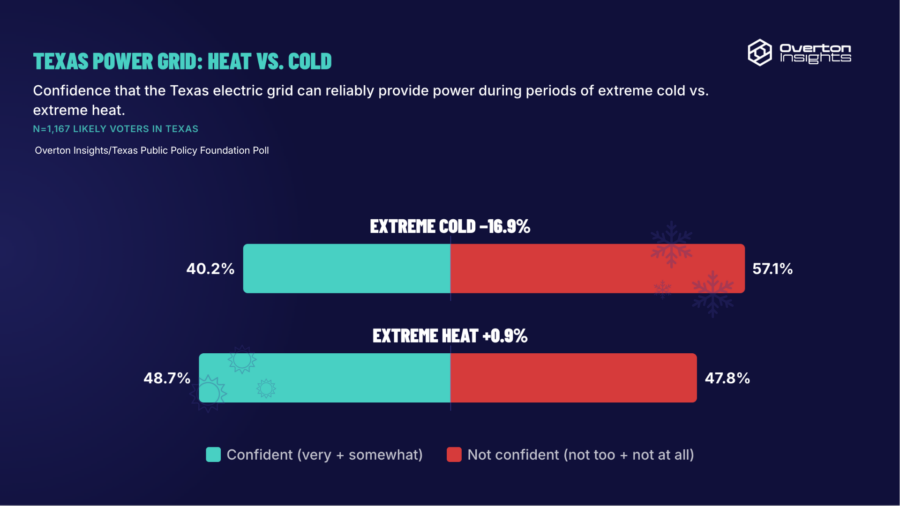
Why the persistent lack of trust? Because the structural problems threatening our grid during freezing temperatures remain unfixed. In 2021, Winter Storm Uri left millions of Texas households and businesses without power for days, leading to hundreds of deaths. While weatherization measures have been taken to prevent another catastrophe, some underlying issues remain.
TPPF’s Brent Bennett warns, “the Texas grid is now in a situation where the winter period, not the summer period, will see the greatest likelihood of electricity shortages.”
The core causes of this seasonal vulnerability are clear:
- Skyrocketing Winter Demand: Electricity demand is rising rapidly because of the influx of 24/7 demand from data centers and because newer homes increasingly rely on electricity-hogging heating systems rather than natural gas.
- Overreliance on Unreliable Energy: Texas has heavily integrated subsidized wind and solar power into the electric grid. Unfortunately, Texans can’t count on these sources when it’s dark outside and the wind isn’t blowing.
- Lack of Reliable Power Plants: The massive influx of weather-dependent energy has stalled new investment in dependable natural gas facilities. We desperately need these always-on thermal plants to survive extended, days-long freezes.
Since Winter Storm Uri, the ERCOT grid has added over 30 gigawatts of solar, 20 GW of batteries, 10 GW of wind, and only 4 GW of gas generation. That’s a lot of resources that help to meet summer peak demand but will do almost nothing during the next major winter storm, as evidenced by Winter Storm Fern in January when those variable resources produced only 7 GW of combined power during the peak hours.
When a long-duration winter storm hits, short-term battery storage simply cannot cover the massive gap in power. By trading reliable thermal generation for weather-dependent technology, our grid is being hollowed out.
As we approach the 90th Texas Legislative Session, TPPF is recommending critical electricity market reforms, including establishing reliability standards for all ERCOT generators and properly valuing reliability. We cannot continue forcing Texas ratepayers to subsidize unreliable energy while simply crossing our fingers for mild weather. It is time to prioritize dependable natural gas generation and ensure that the grid can actually support Texans’ growing energy demand when they need it most.
This commentary is published on Thursdays as part of TPPF’s subscriber-only newsletter that rounds up content from the week. Subscribe to The Post >>