
Editor’s Note: This is the latest part of a series on rural Texas and the challenges that rural Texans face. Over the next year, the Associated News Service will delve into the issues facing the Lone Star State’s 177 (out of 254) rural counties.
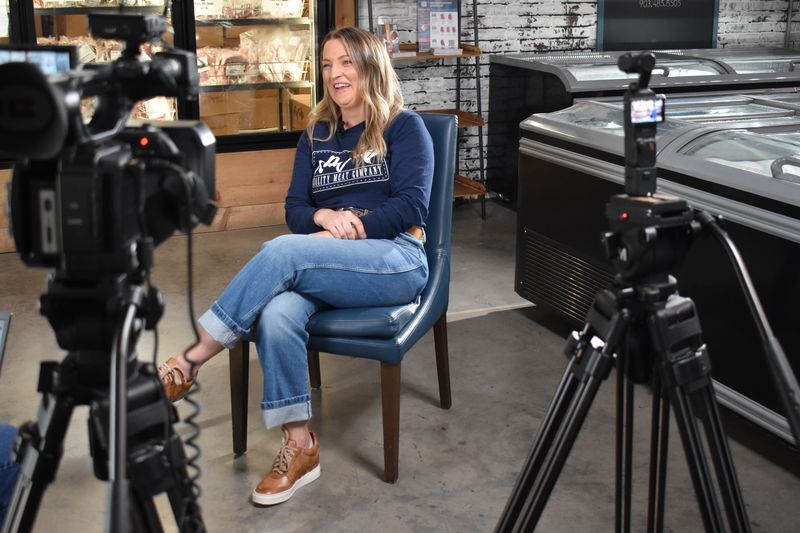
SULPHUR SPRINGS, Texas — Katie Koon says she didn’t stand a chance.
Nearly 20 years ago, Katie traveled from Oklahoma to visit her sister in Sulphur Springs. As they drove through the ranchlands of Northeast Texas, her brother-in-law staged a scene straight out of a Western movie. A herd of cattle lined the farm-to-market road, while he and his friends roped the animals on horseback.
For Katie, who grew up in a family of dairy farmers, the moment felt both familiar and newly exciting.
“I said, ‘I love this. This is the place for me,’” Katie recalled.
What began as a visit eventually led her to move to Texas, where she has built a life in agriculture—and where she has become part of an industry struggling to survive amid consolidation, rising costs and changing markets.
Katie’s story reflects a broader challenge facing family farms and ranches across Texas.
For generations, small agricultural operations provided food, jobs and economic stability for rural Texas communities. Today, many ranchers say that the market is becoming increasingly difficult to sustain. Agricultural census data show a gradual decline in family-owned farms, while barriers to entry continue to rise for new producers.
As the American Enterprise Institute notes, “between 2017 and 2022, the number of US farms fell by 7 percent, from about two million to just under 1.9 million farms in 2022. Over the same period, however, the average size of US farms grew by 5 percent to 463 acres as, at least to some extent, farmland moved from smaller to larger operations.”
Each year, thousands of family-owned farms face closure; the revenue they receive is simply not competitive. As traditional pathways become less profitable, many ranchers are searching for alternative business models to remain competitive.
And that’s where Katie comes in, with Rail 19—a processing plant and retailer for not only Katie’s own cattle, but for her neighbors, as well.
A Slower Pace
The cattle industry once operated at a slower pace, dominated by family-owned farms that raised livestock and maintained greater control over production.
But technological advances transformed that system. Larger feedlots, improved transportation networks and industrial-scale meat processing increased production capacity and efficiency. As demand grew, so did consolidation throughout the supply chain.
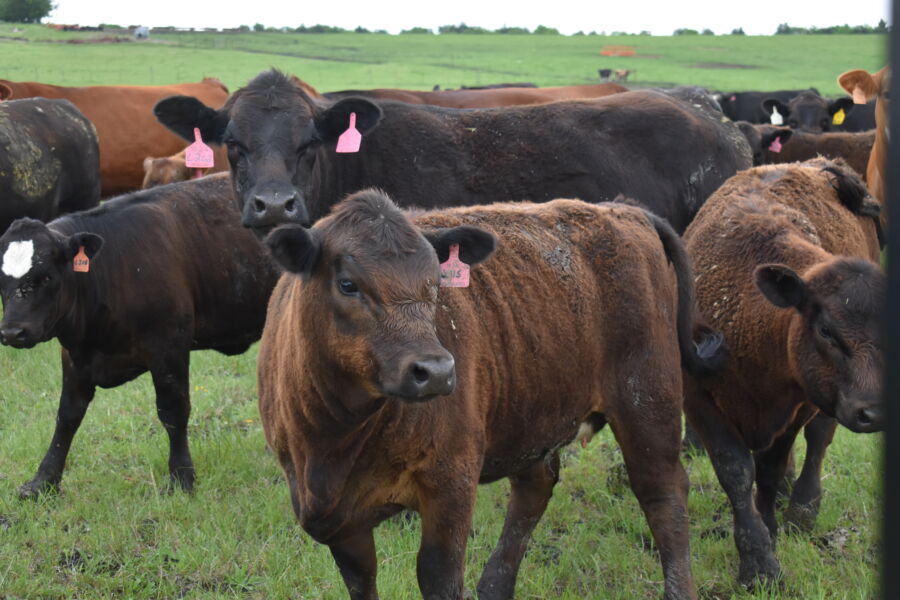
Today, many family ranches function as cow-calf operations. Ranchers raise calves until they are roughly six months old, before selling them to larger operations or feedlots. The annual sale often provides a ranch’s primary source of income.
The remaining stages — feeding, processing, packaging and distribution — are largely controlled by big companies with the infrastructure to operate at scale.
As a result, small producers often struggle to compete on price and volume.
“Meatpacking is a concentrated industry, with the four largest firms handling 85 percent of all steer and heifer purchases and 67 percent of all hog purchases,” the USDA’s Economic Research Service reports.
The consolidation of these markets began decades ago, and many of the challenges facing independent ranchers can be traced to that period. But before the consolidation began, there was an agricultural boom in the 1970s.
Increased production, government incentives, and expanding global demand encouraged rapid growth throughout the industry. But when land values declined and farm incomes fell, it caused the 1980s farm crisis, in which thousands of producers were forced out of business.
An estimated 200,000 farms closed during that period.
The Texas Public Policy Foundation’s Ammon Blair draws a line from the 1980 farm crisis to the current state of commercial agriculture.
“It all stems from the destruction of our ability to actually compete against foreign imports and for them to compete against market access and against large retailers,” Blair said. “At the end of the day, that’s what killed our small towns.”
Blair argues that independent producers today face limited access to consumers and increasingly concentrated markets that favor large-scale operators.
A Legacy in the Land
Agriculture was always part of Katie’s life. Her mother often joked, “I just pray you don’t marry a dairy farmer,” repeating advice she had received from her own mother.
Instead, Katie did exactly that.
After moving to Hopkins County, she married into a dairy farming family and spent years working in an industry that was becoming increasingly difficult to sustain.
“When the milk check didn’t pay for the feed, we knew we were in trouble,” Katie said.
As dairy prices stagnated and maintenance costs rose, the family faced a difficult decision. Rather than leave agriculture altogether, Katie and her family shifted toward beef production after partnering with relatives who proposed building a meat-processing facility.
The transition required selling dairy equipment, purchasing land, and building a cattle herd from scratch. But even with roughly 400 head of cattle, profitability remained elusive.
“Everyone I know that’s in agriculture has another job,” Katie said. “We actually put in our own money every year, year after year, to keep our family farm.”
Their experience mirrors statewide and national trends. According to the Texas Farm Bureau, most family farm households rely on off-farm income to remain financially viable.
“Among farms making less than $100,000 in annual gross sales, over 60% of farmers had an off-farm job,” the Bureau reports. “For farms with more than $500,000 in gross sales, that number drops to below 45%.”
And as the USDA adds, “About 86 percent of U.S. farms are small family farms, with gross cash farm income less than $350,000. The households operating these farms typically rely on off-farm sources for the majority of their household income.”
Katie’s family eventually pursued a different approach.
Rather than relying solely on traditional commodity markets, they created a local meat processing facility and direct-to-consumer sales through their business, Rail 19, in Hopkins County.
The model allows local ranchers to sell cattle for processing, and lets consumers purchase meat directly from the source.
The concept gained momentum during the COVID-19 pandemic, when disruptions at large meatpacking plants exposed vulnerabilities in the national supply chain. Demand for local processing surged as producers searched for alternatives.
“With big meatpackers hobbled by COVID-19, some farmers have to euthanize their ready-for-market animals,” NPR reported in 2020. “But others are turning to local, small-scale butchers and meat processors.”
At the height of the pandemic, rows of trucks lined the road leading up to the Koons’ farm, and phone calls came constantly. The big processors were shut down, and a new market for small processors opened up.
As large meat processors reduced cattle purchases during the COVID-19 pandemic, many ranchers were left without buyers, creating a bottleneck in the supply chain.
Rail 19, then a small processing operation, expanded its capacity to help meet the demand.
“We said, ‘Let’s start adding onto this thing.’ We were going to start adding some holding pens. Let’s look at this equipment. What can we do?’” Katie said. “It was more so to help.”
After receiving grant funding and spending years navigating construction and regulatory requirements, Rail 19 opened fully in 2024.
The operation quickly outpaced Katie’s ability to supply cattle from the family’s own herd.
“We were starting to build really good relationships with our local farmers,” Katie said. “Our customers coming in had beautiful beef.”
Today, the business relies on partnerships with neighboring producers to keep shelves stocked.
The Big Four
Despite the success of local operations like Rail 19, ranchers remain subject to larger market forces.
The U.S. meat-processing industry is dominated by four major companies: Cargill Meat Solutions, Tyson Foods, JBS USA and National Beef Packing Co.
TPPF’s Ammon Blair argues that decades of consolidation have concentrated power among a handful of firms that control critical portions of the supply chain.
“In 1985, Cargill led to the consolidation of every portion of the supply chain,” Blair said.
The case stemmed from Cargill subsidiary Excel Corp.’s acquisition of Spencer Beef. Opponents argued the merger would reduce competition and squeeze smaller operators. The U.S. Supreme Court ultimately ruled in favor of the acquisition, noting that “The record below does not support a finding of antitrust injury, but only of threatened loss from increased competition.”
Blair contends the decision accelerated consolidation across agriculture.
“At the end of the day, it’s all about regulation and market access,” he said. “Does a farmer have the same access to consumers that a large retailer does? No.”
Many ranchers say the result is a system in which independent producers have little influence over prices once cattle leave their property. Market challenges are only part of the equation.
Katie said building a processing facility required years of permits, inspections and compliance reviews. She even has a full-time USDA inspector at her facility—at her expense.
“I love Texas, but it may not be as free as you think it is when you decide to build a meat plant,” she said.
The approval process took nearly three years before construction could proceed, followed by additional food safety requirements. By the time the facility was operational, the family had exhausted most of its financial resources.
Katie argues that while food safety regulations are important, the cumulative burden can make it difficult for small processors to enter the market and compete with larger companies that have dedicated compliance departments and greater financial resources.
The integration of direct-to-consumer markets in agriculture is growing, but still remains beholden to the larger industry.
But it’s a ray of hope for small farmers and ranchers.
“In a free and fair version of raising your own food and selling it directly to the people who want to buy it from you, there is a big path for that,” Katie said.
Policy Prescriptions
TPPF’s Blair believes policy changes aimed at increasing market access and reducing barriers for independent producers could help strengthen rural economies and create more opportunities for family farms.
Some policy proposals target different challenges facing small farms, ranches and meat processors.
One proposal, the Texas Regional Food Systems Resilience Act, would invest $100 million in state funding over five years to expand rural agricultural infrastructure.
The funding would support projects such as mid-sized meat processing facilities, cold storage, distribution centers and other infrastructure intended to strengthen regional food systems.
The proposal also would provide an additional $10 million annually to support direct-to-consumer markets through outreach, vendor training and technical assistance for small producers.
A second proposal, the Texas Local Processing and Cold Chain Resilience Act, focuses on helping small farms and processors build the infrastructure needed to compete in the marketplace.
The measure would establish grants of up to $500,000 to modernize processing facilities, expand existing agriculture assistance programs to include meat and poultry, provide regulatory guidance and education, and improve access to shipping and distribution networks for small producers.
According to the proposal, the legislation would “directly address one of the most underfunded and poorly distributed elements of our local food system: cold storage and aggregation infrastructure.”
Other proposals could also help. These include:
- Reforming Crop Insurance: Current crop insurance subsidies function as guaranteed revenue streams rather than true safety nets. Programs that guarantee profits irrespective of market realities discourage prudent risk management, adaptation, diversification, and innovative farming practices. At the state level, Texas currently defers to the federal crop insurance framework without additional transparency, oversight, or subsidy conditioning.
- Requiring Country-of-Origin Labeling: This policy would establish a statewide, universal MCOOL mandate for all food and agricultural products sold in Texas, including beef, pork, produce, dairy, and packaged goods. It bypasses World Trade Organization interference by grounding enforcement in state law and consumer protection statutes.
- Reforming ‘Checkoff’ Rules: Texas farmers and ranchers are currently forced to pay mandatory assessments into federally authorized commodity “checkoff” programs under threat of legal penalty. These programs operate under the guise of supporting industry marketing and research. In practice, however, they represent a system of taxation without representation that compels producers to fund speech, policies, and marketing agendas they neither control nor support.
- Revitalizing Texas Antitrust Enforcement: Texas’s powerful antitrust tools lie dormant. Monopolistic consolidation has advanced with little resistance. Rural voters, family farmers, ranchers and small business owners, core constituencies in Texas, are among the hardest hit by monopolistic practices. These groups are not calling for excessive regulation, but for a return to competitive markets, equal footing, and enforcement of the law.
- Ending Duplicative Local Permitting: Small-scale farmers and food businesses in Texas face a burdensome and unnecessary regulatory structure when selling their products in multiple jurisdictions. Even after receiving a permit from the Texas Department of State Health Services, these producers must often obtain additional permits and pay separate fees to local health departments in every city, county, or public health district where they operate. This duplication of permitting obligations creates a costly and time-consuming barrier that disproportionately harms Texas’ independent farmers, cottage food operators, and small-scale food entrepreneurs.
- Ensuring Fair Taxes for Small Farmers: Texas’ agricultural valuation system is broken. While the law provides for land to be appraised based on its agricultural use rather than its market value, countless farmers across the state are being denied that valuation. It’s not because they don’t meet the legal threshold, but because of subjective and inconsistent interpretations by local appraisal districts. The result is a patchwork system that rewards conformity to outdated production models while penalizing innovation, diversification, and small-scale food production.
- Requiring Texas-First Food Procurement: Texas is uniquely positioned to lead the nation in rebuilding regional food systems. Yet state-funded institutions—including public schools, universities, correctional facilities, and healthcare systems—remain largely tethered to centralized, out-of-state procurement models. These supply chains often prioritize the lowest-cost bidder rather than the highest local value, disadvantaging Texas producers and undermining food system resilience.
- Passing an Egg Freedom Act: Texas law currently permits small egg producers to sell ungraded eggs directly to consumers but restricts wholesale sales to restaurants, grocers, and cooperatives—despite growing consumer demand, inflated food prices, and the success of intrastate cottage food reforms. The Egg Freedom Act would allow hundreds of small-scale, often family-run, farms across Texas to enter local markets, increase income, and meet community demand for clean, affordable, local food.
As Texas lawmakers prepare for the 90th Legislature, TPPF’s Blair says the proposals could shape the future of agriculture by expanding opportunities for small producers and strengthening rural food systems.
Expanding processing capacity, encouraging competition and reducing unnecessary regulatory obstacles could give smaller ranchers more options beyond the traditional commodity system.
What’s more, it’s vital to our national security. As U.S. Agriculture Secretary Brooke Rollins told an audience recently, “It isn’t just about preserving a way of life … This is about national security. The minute, the day, the month, the year that we can no longer feed ourselves or fuel ourselves is the minute, the day, the month, the year that we will lose freedom and liberty in America.”
For ranchers like Katie, the goal is not to replace large-scale agriculture—but to create room for local producers to survive alongside it.
“There’s got to be a balance,” Katie contends.
Whether that balance can be achieved may determine the future of family ranching in Texas.
Still photos credit: DeCorein L. Hodge for the Associated News Service.