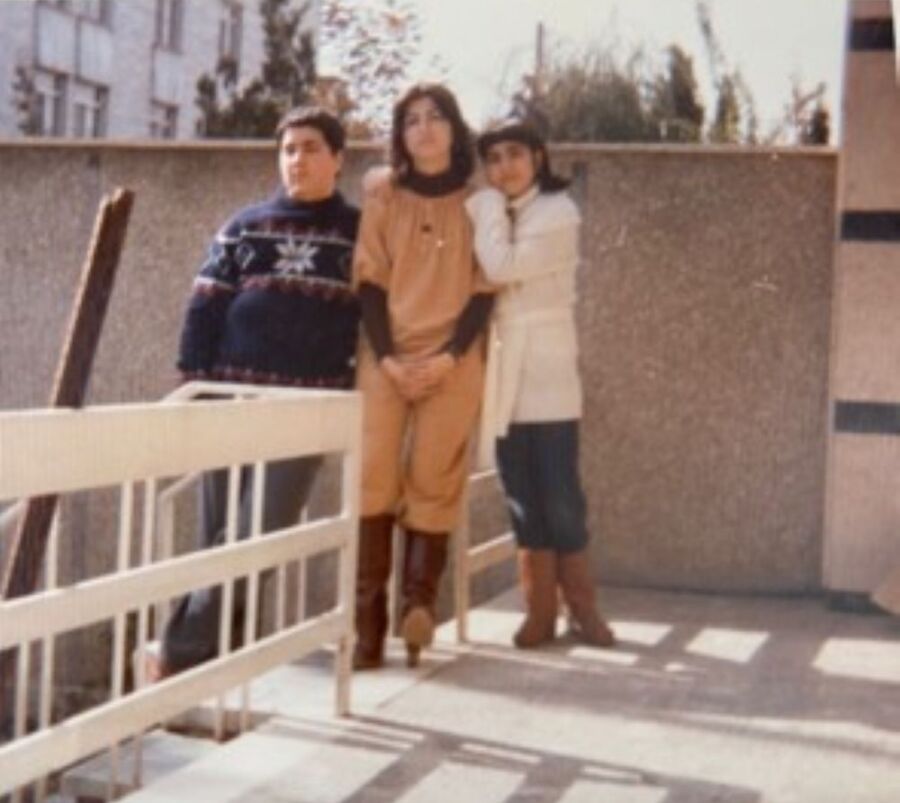
I was 10 years old in 1979, the year my country disappeared.
I don’t say that lightly, and I don’t say it for effect. I say it because it’s the most honest way I know to describe what happened to Iran — and to me — in the space of a single school year. One day I was a girl who went to class with my hair uncovered, who lived in a country that had recently given women the right to vote, expanded custody and inheritance protections, and put women on the bench as judges and in the halls of international diplomacy.
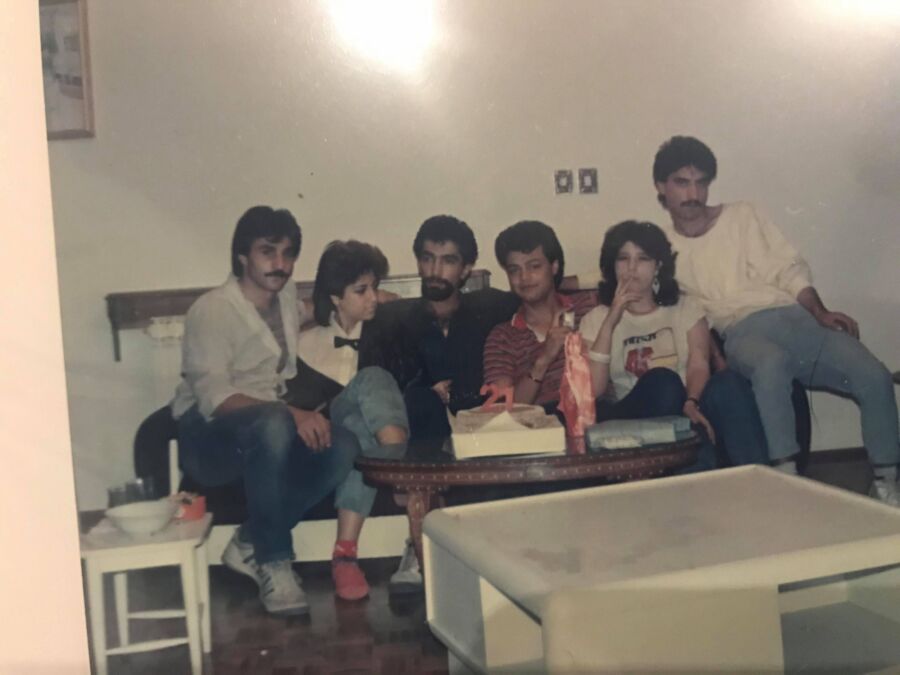
The next, I was being lined up in a schoolyard so a stranger could check whether any strands of my hair showed beneath a scarf I hadn’t worn the year before — and told that if it did, I could be beaten, or sent home, or simply erased from the roll of students who were allowed an education.
I feel, in a strange way, lucky. I got to see Iran on both sides of that line: the country as it was, modernizing and imperfect but opening, and the country as it became almost overnight. Most people who talk about revolutions never get to hold both halves in their hands at once. I did, and I was 10, which meant I was old enough to remember and too young to understand what I was watching. It has taken me the rest of my life to understand it.
Here is the part people get wrong first: The revolution wasn’t one thing wearing one face. It was a coalition — Islamist clerics, Marxists, the intellectual and student left, secular nationalists — who agreed on exactly one point, which was that the Shah had to go. That was the whole agreement. They did not agree on what should replace him, and most of the people marching in those streets believed, sincerely, that they were marching toward more freedom, not less. The leftists and the students wanted their political voices and an end to repression. They did not think they were voting for a new and far harsher tyranny.
They were wrong, and Iran has been paying for their mistake — and mine, since I was a child living inside it — for almost 50 years.
What decided the outcome wasn’t popularity. It was organization. The clerics had something no other faction had: a network already established, in every neighborhood, in every town, in the mosques. They didn’t need to build trust — they inherited it. And Ayatollah Khomeini’s message was almost insultingly simple: The Shah is corrupt, the Shah is a puppet of foreign powers, and Islam will bring you justice — along with promises to cover people’s utility bills and transportation costs.
I have heard versions of that same promise, in different words, in political campaigns since, and it stops me cold every time. The packaging changes. The offer — trust us, and we’ll take care of everything — does not.
Once the clerics had power, they didn’t share it. The Marxists, the students, the secular reformers who had linked arms with them to topple the Shah were, one by one, imprisoned, exiled, or executed. Between 1980 and 1988, there were mass executions of the very people who had helped bring the revolution about. They were useful once. Then they stopped being useful. I’ve since read about Mao’s Red Guard in China — young revolutionaries he mobilized to turn on their own parents and teachers, who were then discarded and destroyed once they had served their purpose and grown inconvenient. It is, chillingly, the same playbook. It is always the same playbook. Radical movements rarely reward the people who hand them power. They remove them, because a movement that has finished consolidating control has no more use for allies who might one day disagree with it.
And the rest of us — the ones who were just living our lives, going to school, not particularly political at 10 years old — absorbed the new curriculum along with everyone else. I want to tell you something that still embarrasses me: I did not learn what the Holocaust was until I was 17, living in the United States, when someone mentioned the word and I had to go look it up. It had simply been erased from what I was taught. Not softened, not contextualized — removed. That is what an ideology does when it fully captures a country’s institutions. It doesn’t just tell you what to believe. It tells you what you’re allowed to know ever existed at all.
I bring all of this up now, decades later and thousands of miles away, because I don’t think the lesson of my childhood is really a story about Iran. I think it’s a story about what radicalism does, full stop, regardless of which flag it happens to be flying that decade. It moves in coalition, because coalitions are how a minority view gathers enough force to seize a majority’s institutions. It makes promises it has no intention of fully keeping, because promises are cheap and it’s power that’s actually being pursued. It captures institutions — schools first, always schools first, because that is where you get 30 years of a generation instead of three. And once it no longer needs your permission, it treats dissent as something to be punished rather than something to be answered.
I became an American citizen as an adult, and I have never forgotten what that meant, because I had already lived the alternative. In Iran, you cannot simply apply to belong to your own country if the people running it decide you don’t fit their vision of it. Here, I raised my hand, and I was let in — not because of my bloodline or my faith or my politics, but because I was willing to pledge allegiance to a set of ideas: that we don’t kill each other over disagreement, that power changes hands peacefully, that dissent is a right and not a provocation. I cried when I took that oath, and I still mean every word of it.
That is exactly why I get uneasy — genuinely uneasy, not performing it for effect — watching how casually some people, especially those who have never lived a single day without the freedoms they were born into, treat the guardrails of an open society as optional, even oppressive.
Free institutions are not the default condition of a country. They are the unusual one. What happened in Iran can happen anywhere those institutions are allowed to hollow out: a free press that stops being free, schools that stop teaching an honest and complete history, a public that grows used to demonizing whoever disagrees with it instead of debating them. None of that arrives with tanks in the street. It arrives gradually, in language that sounds like justice, spoken by people who are very sure they are the good guys — right up until they have the power to prove otherwise.
I am not writing this to tell anyone what to think about any single issue in the news right now. I am writing it because I was the 10-year-old in that schoolyard, and I know exactly how fast things can change. Liberty is not a permanent inheritance. It is a maintenance project, generation after generation, and it survives only in the hands of people willing to notice when it’s being taken from them one small compromise at a time.
Guard it. I promise you, it is far easier to lose than you think — and immeasurably harder to win back.