Too many policymakers think of the Iranian regime as solely a Middle Eastern matter. But with attentions focused elsewhere, a powerful network of South Asian Shia Islamists operates with near impunity much closer—across the state of Texas.
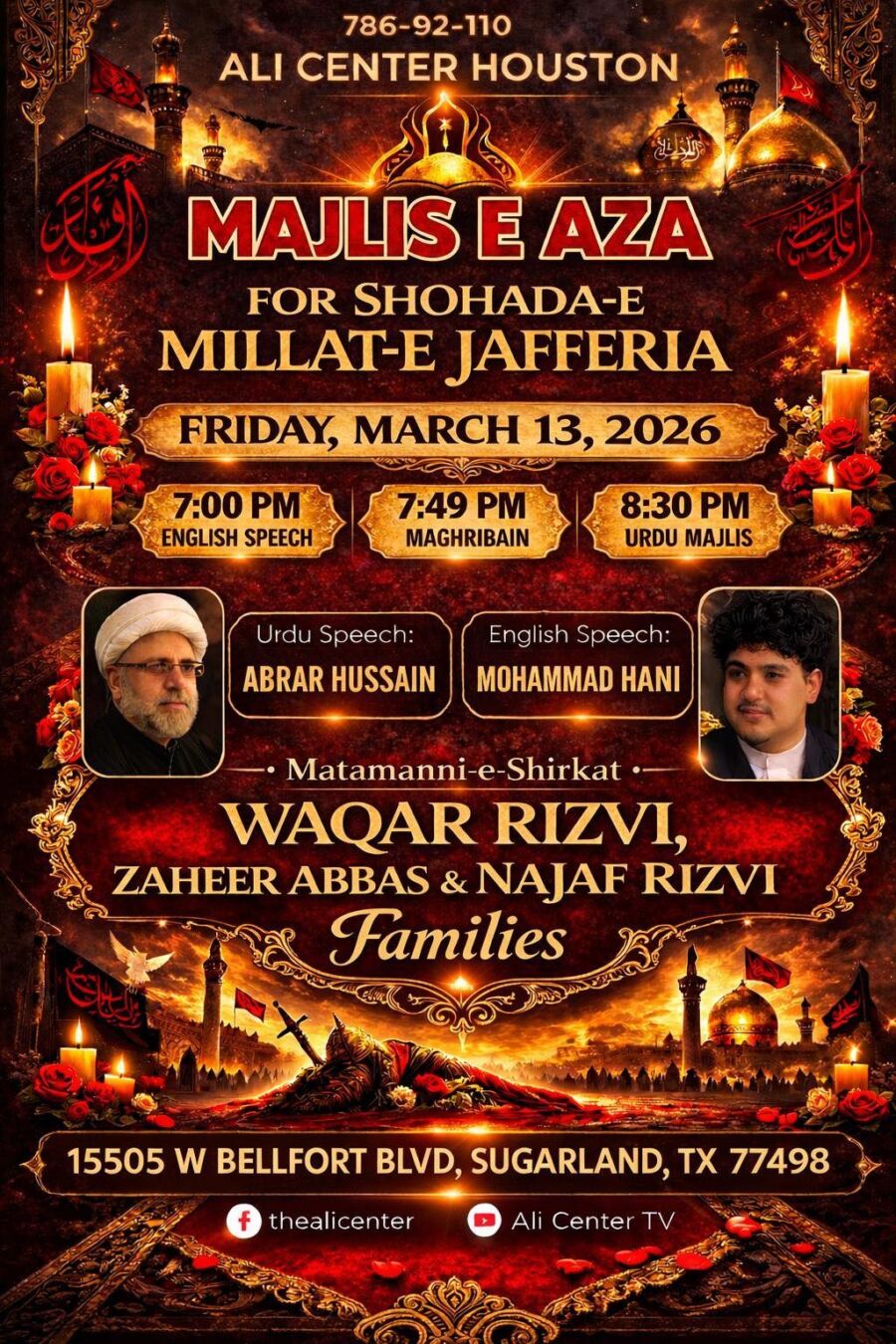
On March 13, a Pakistani Shia mosque in Houston, named the Ali Center, hosted a commemoration for the “Shohada-e-Millat-e-Jaffaria Pakistan.” Literally translated as the “martyrs” of the Pakistani Shia community, the term in fact represents a specific political agenda of the Iranian regime and its terror proxies among South Asian Shia communities.
In particular, “Shohada-e-Millat-e-Jaffaria” refers to the martyrs of the revolutionary efforts of Tehreek-e-Jafaria Pakistan (TJP), a Khomeinist movement established by the Iranian regime but banned in 2002 by the Pakistani government because of its involvement in “bloody internal sectarian violence.”
Following successive bans, members of the TJP in Pakistan repeatedly re-organized under new names, each time with identical leadership. Today, the broader TJP movement uses the pseudonym Millat-e-Jafaria. It operates a political wing named the Shia Ulema Council, and a charitable arm named the Shaheed Foundation. Another group, the U.S.-designated terrorist organization, the Sipah-e-Muhammad, is variously referred to as either a “splinter group” or “armed wing” of the TJP.
Sajid Ali Naqvi is the former head of the TJP and the current head of its clerical body, the Shia Ulema Council. Naqvi served as the official representative in Pakistan of the late Iranian Supreme Leader, Ayatollah Khamenei. Naqvi has since pledged fealty to the Iranian regime’s new supreme leader, Ayatollah Mojtaba Khamenei.
This terror-tied network in Pakistan operates openly in Texas, utilizing half a dozen Pakistani Shia institutions in Houston, as well as Iranian regime-run mosques elsewhere in the state.
Millat-e-Jafaria
In Houston, the Ali Center’s event featured an Urdu-language speech from its imam, Abrar Hussein Irfani. The imam came to work in the United States in 2024. It appears that open ties to Iranian terror networks were apparently not enough to forestall the cleric’s visa.
Irfani trained in the Iranian regime’s clerical base in the city of Qom, before pursuing a Ph.D. in 2021 with Al-Mustafa International University, a “terror front” for the Islamic Revolutionary Guard Corps (IRGC). A year before he graduated, the U.S. Treasury designated and sanctioned Al-Mustafa for enabling IRGC “intelligence operations.”
Irfani is repeatedly featured in Iranian media, which reports his involvement with various Iranian regime events. One report quotes a man matching Irfani’s name, background and religious expertise addressing an event in Iran organized by the Foundation of Martyrs and Veteran Affairs, an official regime body, also known as the Martyrs Foundation, that was designated by the United States in 2007 as a terrorist organization because it “channels financial support from Iran to several terrorist organizations in the Levant, including Hizballah, Hamas, and the Palestinian Islamic Jihad.”
Another speaker at the Millat-e-Jafaria event in Houston, Muhammad Hani Mirza, is a popular speaker at Pakistani Shia mosques across Houston, such as the AlGhadeer Educational Foundation, as well as a Khomeinist mosque targeting black American converts to Shia Islam named Masjid Al Rasul.
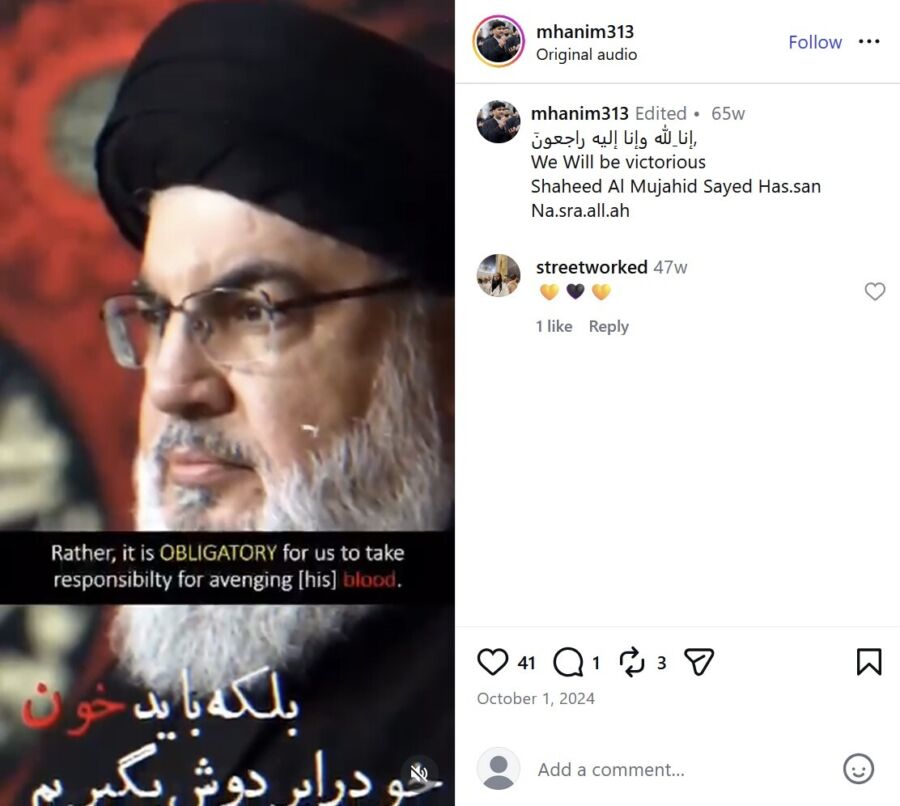
Mirza regularly posts mournful expressions of love for Iran’s Ayatollah Khamenei, as well as the Hezbollah terrorist leader Hassan Nasrallah, including videos that promise “it is obligatory for us to take responsibility for avenging [his] blood.”
Shia Ulema Council
The Ali Center imam is not the only Iranian-trained cleric operating in Texas. Yasir Naqvi, a Houston imam involved with another Pakistani Shia mosque in the Houston suburb of Sugar Land named the AlGhadeer Educational Foundation, also trained at the Iranian regime’s top seminary in Qom.
Naqvi is a frequent contributor to a popular Pakistani Shia YouTube channel based in the United States, which regularly posts videos of Naqvi’s Houston sermons. The channel appears otherwise dedicated to TJP clerics and TJP causes.
The channel’s videos and posts include extensive praise of the TJP leader (and current head of its Shia Ulema Council) Sajid Ali Naqvi, along with other Council members, as well as pictures and praise of Iran’s founding terror-theocrat Ayatollah Khomeini.
More importantly, Pakistan-based members of TJP’s Shia Ulema Council have toured Pakistani Shia mosques in Texas. In 2016, Shahnshah Hussain Naqvi, described as a “senior member of the Shia Ulema Council,” addressed the Al Murtaza and Dar-e Abbas mosques in Houston. Shahnshah Naqvi is a leading Pakistani Khomeinist, and a prominent supporter of the current Iranian regime and its IRGC terror commander Qassem Soleimani, who was assassinated in a United States drone strike in 2020.
Such is the strong base of support for the TJP among Texas’s Pakistani Shia Islamists that social media posts TJP’s Shia Ulema Council and its various clerics sometimes include the hashtag “#texas.”
Shaheed Foundation
The Shaheed Foundation raises funds in the United States, Europe and Pakistan to support the “martyrs” of the Khomeinist cause, along with, supposedly, other Shia Muslim victims of Pakistani sectarianism.
How the Shaheed Foundation defines “martyrs” is unclear, but the foundation’s webpages explicitly mention the “martyrdom” of top Hezbollah officials. Indeed, the foundation is an openly pro-terror operation. In 2006, the Foundation organized a rally in “Celebration of the Great Victory of Hizbullah over Israel and tribute to the Islamic Hero, [Hezbollah leader] Syed Hasan Nasrullah.”
As with most Islamist movements, martyrdom is not a setback but an aspiration for the TJP movement. The Shaheed Foundation’s website glorifies death, writing that “there is no greater achievement for a momin [Muslim believer] than to leave his abode with wounds that are medals on his chest, and his face covered in blood, in the struggle for justice.”
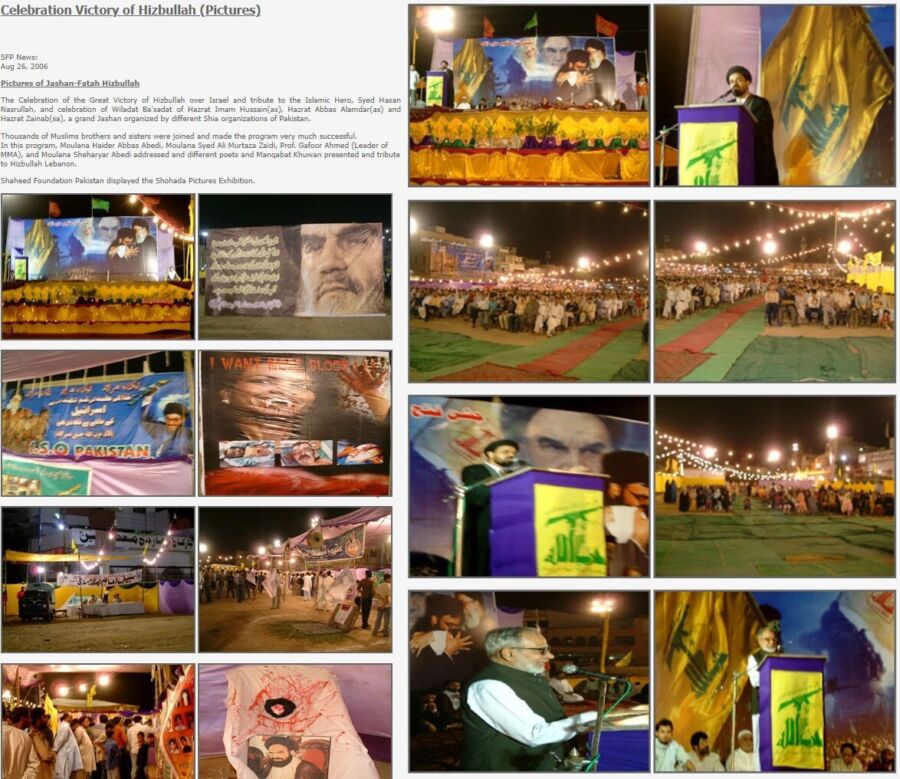
A Shaheed Foundation rally for the Lebanese terrorist group Hezbollah
The foundation operates under TJP-aligned clerics and activists, including the son of Arif Al-Hussaini, the TJP founder, whom Iran’s Ayatollah Khomeini appointed as his representative, and tasked with advancing Iranian revolutionary ideals in Pakistan.
In the United States, the Shaheed Foundation raised hundreds of thousands of dollars through a Texas-based nonprofit named Saviour USA. Saviour USA’s website openly boasted of its partnership with Shaheed Foundation, stating: “Shaheed Foundation Pakistan is an ace institution of Millat-e-Jaffaria Pakistan … In its current form this institution began functioning in 1997 based on the teachings of … Imam Khomeini.”
Saviour USA has served as a partner with a number of Texas Shia Islamist institutions, including the Institute of Islamic Learning in Dallas, the Islamic Ahlul Bayt Association in Austin, the (regime-controlled) Islamic Education Center in Houston, and a Pakistani Shia mosque: Markazi Imam Bargah Al-Murtaza near Sugar Land. It also advertises heavily through Pakistani Shia religious community organizations across Houston.
However, in 2019, the TJP’s Shaheed Foundation announced that it would instead only use the New Jersey-based Al-Kauser as its official charitable partner. Nonetheless, Saviour USA apparently continues to support Shaheed Foundation indirectly, through its own contributions to Al-Kauser projects.
Despite its East Coast headquarters, Al-Kauser is particularly active in Texas. Its recent tax returns disclose a $5,000 grant to the Ali Center in Houston. The charity has boasted of fundraising events in 2024 and 2025 in Houston and Dallas.
And as the terror-tied Shaheed Foundation itself boasts, in 2021, Al-Kauser hosted an event in Dallas at which the keynote speech was given (remotely) by the Shaheed Foundation’s head, Syed Hussain Al-Hussaini, the son of Arif Al-Hussaini, the TJP founder and Ayatollah Khomeini’s representative in Pakistan.
Outstanding Questions
In 2020, the Department of Justice arrested two Houston-based operatives, Muzzamil Zaidi and Asim Naqvi. A government spokesman accused the two men of “considerable operational links to the [Islamic Revolutionary Guard Corps],” a U.S.-designated terrorist organization. In 2024, the two defendants pleaded guilty “for their roles in an illicit scheme to collect tens of thousands of dollars from the United States to Iran, including in the name of Ayatollah Ali Husseini Khamenei.”
The case against the two focused on efforts to move money through Middle Eastern states. However, both Zaidi and Naqvi were of Pakistani origin, and closely involved with TJP-aligned mosques across Houston. One Pakistani Khomeinist community organization, named the Houston Azadari, sought to fundraise for Zaidi’s legal defense.
As a result of his plea, Zaidi is already out of jail. He continues, it seems, to operate in the interests of the Iranian regime. In March 2026, he addressed an Al-Quds Day rally in Houston (an annual regime-linked event), denouncing the “American empire” and promising that “the resistance is a way of life.”
With Texas Shia charities, mosques and imams advocating and fundraising for foreign, violent political movements; visas issued to imams involved with U.S.-designated terror groups; and terror financiers such as Zaidi already back out on the streets, there is clearly more for the federal government to prosecute.
In most cases, we do not require new statutory tools to tackle these problems; we simply need the federal government to pay closer attention to enormous variety of American Islamist threats, and better enforce existing law.