The Texas Public Policy Foundation’s Center for the American Future had a busy and successful year defending the Constitution. Below is a list of key victories, along with some new cases that launched in the last 12 months.
VICTORIES
1. Stopped the feds from destroying Texas’ border barriers
Our first border-related win of the year was in the border buoy case, which involved floating marine barriers to deter illegal border crossings. It was TPPF’s amicus brief on behalf of 21 members of Congress that first raised the legal argument that ultimately became the reason decided by the Fifth Circuit for why Texas won.
The second border case involved concertina wire barriers. When Biden’s Customs and Border Protection agents were caught cutting barbed wire put up by the State of Texas, TPPF worked with the offices of the Governor and Attorney General to sue the federal government, serving as co-counsel at the trial court. The Fifth Circuit based its opinion on case law from over a century ago that allowed for federal officials to be sued to stop them from committing state tort acts. The precedent was still in force but had just stopped being used. By bringing it back to life, we not only preserved these border barriers, but validated another way to hold the feds accountable in the future. Read more>>

2. Stopped EPA from unnecessary tightening of ozone air quality standards
A Texas-led coalition of states, including Montana, Arkansas, Missouri, Mississippi, and Louisiana, stopped efforts by New York and a handful of other liberal states to enter into a friendly “sue and settle” agreement with EPA to needlessly tighten national ambient air quality standards for ozone. The Court of Appeals for the District of Columbia Circuit agreed that EPA should not promulgate more stringent ozone standards until it engages in a comprehensive technical review of the existing standards. As a result of the litigation, EPA will proceed in due course to periodically review the ozone standard as required by the Clean Air Act. Read more>>

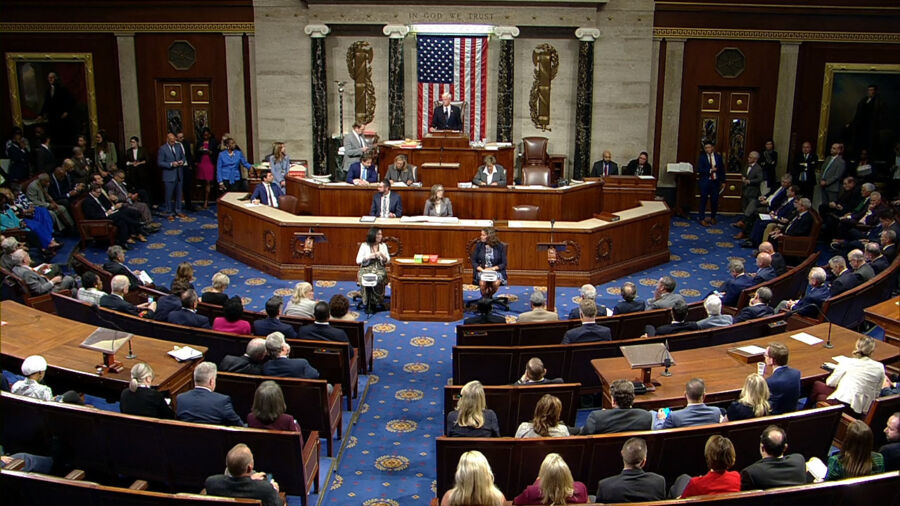
3. Invalidated the U.S. House’s proxy voting rule
This lawsuit was originally filed with the State of Texas in response to Congress’ unlawful passage of the $1.7 trillion omnibus spending bill in December 2022. The U.S. Constitution’s Quorum Clause requires a majority of House members to be physically present for the U.S. House of Representatives to conduct business. As less than half of the members were present for the deciding vote, with the rest voting by proxy, A U.S. District Court agreed that this legislation never should have passed, and the president should not have signed it. Read more>>
4. Defeated FCC’s Universal Service Fund tax
Congress authorized the FCC to raise money for the Universal Service Fund (USF), supposedly to expand telephone service. But Congress never set any limits on how much the FCC can collect, handing a blank check to an agency full of bureaucrats. And then the FCC redelegated this taxing power to a private entity full of self-interested telecom insiders, in effect allowing an unelected corporation to set the tax rates paid by millions of Americans. The U.S. Court of Appeals’ decision reaffirms the fundamental principle that only Congress has the power to tax and that this power cannot be delegated away lightly. The U.S. Supreme Court recently announced it will review the decision. Read more>>

NEW CASES
1. Challenging EPA’s new emissions rules for trucks and cars
TPPF filed two lawsuits in the United States Court of Appeals for the District of Columbia challenging EPA’s stringent new rules governing greenhouse gas emissions from trucks and cars. Together, the two rules require that at least 30% of trucks and 70% of cars be all-electric by 2032. The rules essentially mandate the mass electrification of trucks and cars throughout the United States within eight years. Read more>>

2. Challenging the validity of the Pregnant Workers Fairness Act
Earlier this year, the U.S. Equal Employment Opportunity Commission (EEOC) issued a final rule under the Pregnant Workers Fairness Act requiring employers to provide leave for an employee to obtain an abortion. The omnibus legislation containing the PWFA should never have passed because not enough U.S. House Members were physically present for the vote to be valid, as required by the Quorum Clause of the U.S. Constitution. Therefore, this regulation was implemented under a void statute, and should be considered invalid. This case will vindicate the rights of all private employers subject to the PWFA’s unconstitutional requirements. Read more>>

3. Challenging the Corporate Transparency Act
Under the recently adopted Corporate Transparency Act, the Federal Government now demands that virtually anyone who forms a state corporate entity must disclose a host of otherwise private information to federal law enforcement—even if they are not engaged in any interstate activity, and are not suspected of any crime. Like many Texans, TPPF’s clients formed LLCs under state law simply to hold property in a safe and legal way. This ordinary state-based activity should not force you to disclose private information into a federal law enforcement database. Read more>>

Thanks for reading! Stay up-to-date on our cases in 2025 by visiting centerfortheamericanfuture.com