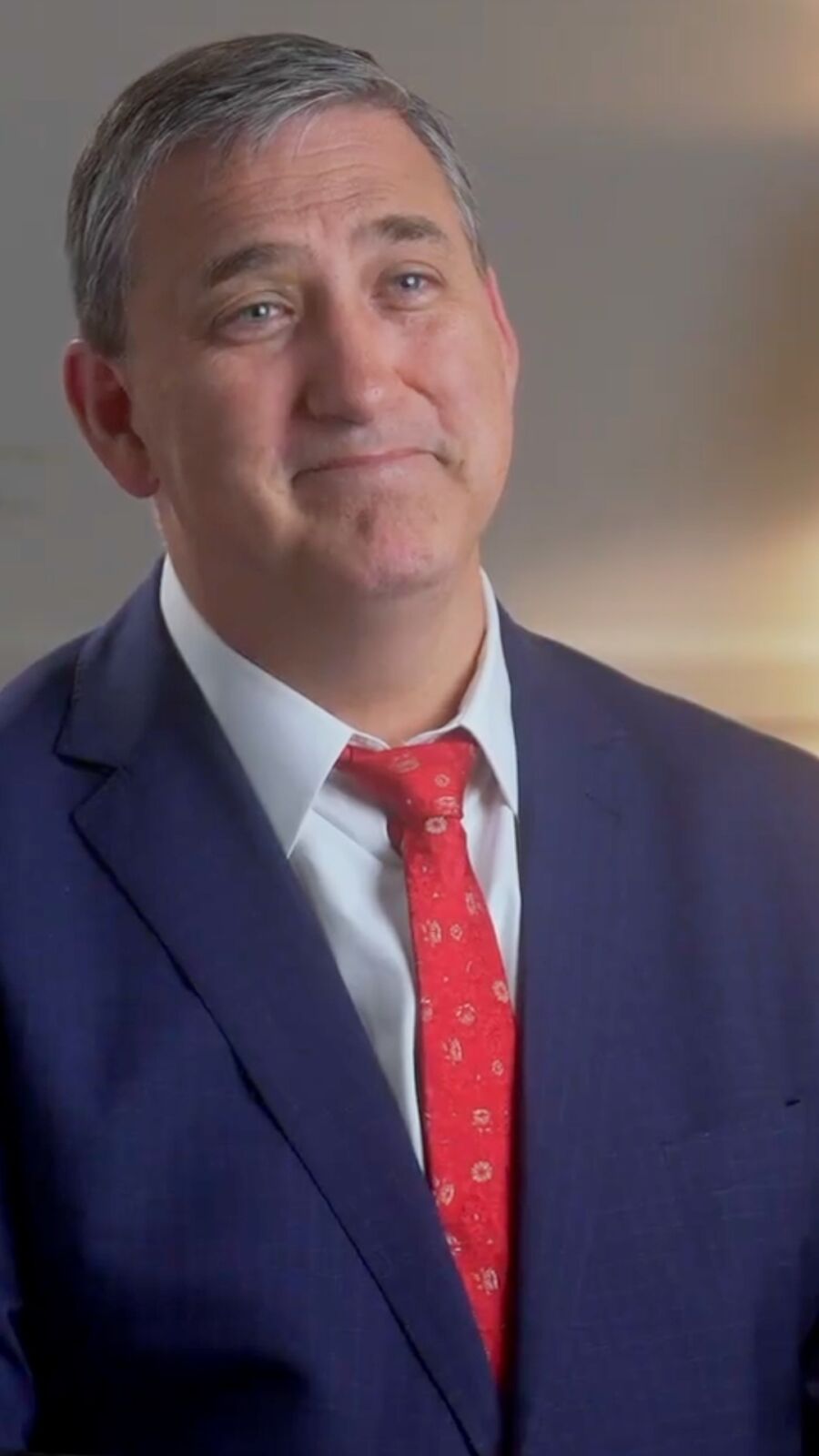
Editor’s Note: This is the first part of a series on rural Texas and the challenges that rural Texans face. Over the next year, the Associated News Service will delve into the issues facing the Lone Star State’s 177 (out of 254) rural counties.
WHITEHOUSE, Texas—Nathaniel Moran’s football coach tried to put it gently: As the team’s starting quarterback and captain, it just wasn’t working anymore for Moran to rush off the field at halftime, change into his band uniform and grab his trombone.
“You have a lot of eggs in your basket,” the coach said. “For my starters, I need kids who are focused—who have one egg in their basket.”
Moran, a senior at Whitehouse High School, understood. For his first three years in high school, Moran did both. He played his heart out on the field during the game, and then at halftime, he played his heart out on the field.
As band kids know, the trombone is the backbone of a marching band, with its wide range and visual appeal. Everyone in the stands wonders when the trombone’s long slide is going to whack an innocent trumpet player. Colorado State University’s infamous “Trombone Suicide” routine—in which trombone players stood shoulder-to-shoulder and took turns swinging their horns and ducking—was discontinued in 2016 for safety reasons. Being a trombonist in a marching band simply requires a high level of excellence.
“I loved the lessons I learned in both athletics and band,” said Moran, who now represents Whitehouse and East Texas in the U.S. House of Representatives. “I think that’s something about rural Texas, especially East Texas—we’re fine with our kids having lots of eggs and lots of baskets. We’re on lots of teams and lots of activities.”
At larger schools and in larger cities, Moran said, he likely wouldn’t have been afforded so many opportunities.
Opportunity is a theme Moran comes back to again and again. In rural parts of Texas—including Moran’s Congressional District 1 seat, which includes 17 rural counties—opportunities can seem less abundant, but they do exist.
“I was fortunate enough to have parents who encouraged us, my brothers and I, to go and explore, to try new things,” he said. “And they said when you do something, give it all you have.”
The lessons have been invaluable, he added.
“The mental discipline that it takes, to be sure you’re doing it with excellence as a group, was a lesson I needed to learn,” Moran said.
Moran’s upbringing was fairly typical of both the era and the area, he says. His family came to East Texas in 1976, when his father helped to build a small Bible college. Those weren’t easy times for the family. Moran’s father, Dale, was answering a call, not accepting a high-profile, profitable offer.
“We grew up very poor,” he said. “We lived in a single-wide trailer home. I shared a twin bed with my twin brother till the age of 10 in that little mobile home, and I remember nights when, in the summer, that little vent in the very bottom of that mobile home could barely produce enough cool air to cool down the room. We would get on the floor, as little kids, and try to trap that cool air with a sheet, just so we could be cool enough to go to sleep. I remember months when food was sparse, and you were hoping to make it to payday. But despite all of that, my parents always found a way to be giving and service oriented.”
There was also adventure. It was a very different time, and children were given much more freedom, he added. He could roam as far as his bicycle would take him.
“I had a magical time exploring the woods and the county roads and West Mud Creek,” Moran recounted. “I had a lot of experiences that created a toughness, and independence in me.”
Independence and opportunity—that’s what draws people to rural Texas, and why they keep coming back.
Boom and Bust
Yet other factors draw them away. Even as the population of Texas booms, we’re seeing a hollowing out of rural Texas.
“Modern-day ghost towns are popping up around Texas, communities that still exist, but have lost most of their population and are on the path toward vanishing if they lose any more,” the Texas Tribune reported in 2024. “It’s the result of other losses — a critical industry like a hospital closes, a highway is diverted or the agriculture industry has a few bad years. People move, businesses close, and the local economy dries up.”
And it’s getting worse. Between 2023 and 2024, 65 Texas counties—about 25%—lost residents. According to the Texas Demographic Center, the Lone Star State has 181 counties considered rural; of these, 88 lost population between 2020 and 2024.
Meanwhile, people continue to flock to Texas—just not to the rural areas, at least not in numbers large enough to offset losses. Texas’ population is projected to increase more than 70% from 2020 to 2070, from 29.5 million Texans to more than 50 million.
“The High Plains and West Texas regions are home to billion-dollar industries with agriculture and energy production — lawmakers have long boasted it’s where the nation gets its food, fuel and fiber,” the Texas Tribune continued. “However, the illustrious industries are held together by people living in rural Texas, who are now moving to anchor cities like Lubbock and Amarillo, the resource-rich hubs in the region that can provide the jobs, housing and opportunities that a small town can’t.”
Yet rural Texas is worth saving. U.S. Secretary of Agriculture Brooke Rollins was adamant about this during her confirmation hearings before the U.S. Senate.
“All Americans are important, but the farmer, the worker of the land who feeds all the others is amongst the most notable,” Rollins said. “Thomas Jefferson wrote that agriculture is our wisest pursuit because it will, in the end, contribute most to real wealth, good morals and happiness. And his wisdom holds true today.”
Farming is still a key economic sector in Texas, with an estimated one in every seven Texans working in the field.
“With its diverse climates and land, Texas produces many agricultural commodities to fill seasonal gaps around the world,” according to the Texas Department of Agriculture. “Texas is among the top 10 producers in the U.S. for more than 40 major commodities. The state is 5th in the nation in agricultural exports, ranking 2nd in total animal products exported, and 10th in total plant products exported. Texas exports key commodities, including: Pecans, Peanuts, Citrus (including Grapefruit), Produce, Sorghum, Cotton, Timber, Wheat, Corn, Rice, Livestock and Genetics, Beer, Wine, Spirits, Beef, Dairy and Poultry.”
But it’s not just about farming. In many rural communities, the top employers include retailers such as H-E-B and Walmart, school districts and other local governments, and the health care sector.
Yet filling these jobs with qualified workers is often a challenge.
“Not only do rural Texas communities face geographical distances that make getting people, training, and jobs in the same place more difficult, they also have disproportionately less access to broadband, healthcare, transportation, housing, and childcare options,” the Texas Workforce Commission reports. “Additionally, although the vast majority of rural communities have a community college operating locally, there are fewer local options for rural Texans who are trying to get into the workforce or upskill to a better, more in-demand career.”
Coming Home
But still, Texans endure. For most, it’s about tradition—and values. For Congressman Moran, going off to the big city of Lubbock for college and then law school was something of a shock. But that’s where he met his future wife, Kyna, from Henrietta, Texas—a town in Clay County, population 3,111 in 2020 (down 30 souls from 2010’s population of 3,141).
“That’s something we shared,” Moran said. “She had been in the band, and in FFA growing up. She showed animals. She lived in a little farmhouse built in 1906, and you had to go down a couple of gravel roads to get there.”
Her part of rural Texas looked quite different, he acknowledged.
“She didn’t have a pine tree in sight, while you can’t go two feet without hitting a pine tree in East Texas,” Moran said. “But we knew, as we were building a life together, that we wanted to start a family, raise our kiddos and be a part of a community that was very much like the communities we grew up in.”
They chose the Tyler area, in hopes their children could “share the freedom and the liberty that we enjoyed.”
“When we moved back from Lubbock, we had hardly anything to our names,” he said. “We packed everything up in her little beat-up car and my very old truck, and we drove those 452 miles home.”
Moran practiced in Smith County courts and federal court, focusing on commercial litigation. He looked for ways to serve in the community, and in those early years, he thought often about running for office.
“I had no idea what I was doing,” he said. “But my heart was in the right place.”
In 2005, the Tyler City Council member representing Moran’s neighborhood was term-limited out; it would be an open seat with no incumbent. Moran sought advice from friends and family, then decided to throw his hat into the ring.
He found campaigning to be a very physical activity.
“It’s all about getting out your vote,” he said. “We started walking every chance we had. We spent eight weeks going door-to-door; I think I hit about 1,500 votes myself. What I realized was that it has to be personal relationships, built face-to-face. The conversations you have door-knocking are irreplaceable. Your mailers don’t have the same effect.”
He ran into his former teachers, clients and teammates—including one former band director. And he asked his neighbors about their concerns.
“When you walk neighborhood by neighborhood, you find out who has street issues, who has drainage issues, and garbage and trash issues,” he said—because that’s what they want to talk about.
“Rural politicking is very different from urban politicking because you have the opportunity—and frankly, you must seize it—to engage face-to-face with your constituents,” he said. “It becomes more impersonal the closer you get to the urban areas.”
His first political campaign was a success; Moran won his Tyler City Council seat by a comfortable margin—309 votes to 99. His oldest son was also born that year.
“I felt like I was living the dream,” he said. “I knew I was in the right place, fulfilling my vocational calling.”
But then things seemed to fall apart.
It began when doctors confirmed that Moran’s son had been born deaf.
“We didn’t know what to do about that; we didn’t know how to educate him,” Moran said.
Moran and his family prayed for guidance, for God’s will, but seemed to get no answers. Wasn’t his election a sign that God wanted him to serve on the City Council, and in his community?
But Moran felt his obligation to his family was an even higher calling. The couple decided they wanted their son to be able to speak—a position that’s controversial in this age of identity politics, with “advocates for the deaf” insisting that American Sign Language and the deaf subculture are key to a deaf person’s identity.
“It’s something that you can be proud of because it’s not something that is very common,” one such advocate wrote. “It’s part of you, it’s your identity and maybe identity of a minority group, which means even more proud, you want to preserve it and protect it and you’re just so proud of it. And that’s also really cool as well.”
But the Morans were adamant; they wanted their son to experience and enjoy all of American culture.
“We knew that couldn’t happen here [in East Texas],” Moran said. “There were only two schools in Texas that knew how to teach kids to speak, even though they were fully deaf, and Houston had the best one.”
Moran searched for a job in Houston, but had no offers—until he got a call from his old law school mock trial partner.
“Even though I loved my legal vocation and our calling to public service here, I knew the Lord was calling on me to give that up,” Moran said. “It was the easiest hard decision I’ve ever had to make.”
Moran resigned from his City Council seat, and soon, the family was in Houston, with his son enrolled in the Melinda Webb School at the Texas Hearing Institute.
In hindsight, it’s clear that the move to Houston wasn’t the kind of detour that can derail a political career. Instead, it was a course-correction that led to the halls of Congress.
“Had I not been willing to walk away from that City Council seat at the time, I would never have become a county judge, and I would never have become a member of Congress,” he said.
The Houston sojourn lasted for three years, while his son received the grounding in speech that his parents wanted for him.
“At the end of three years, when his schooling ended, he could speak in full sentences,” Moran said. “We were amazed at the miracle that took place down there. But we were ready to come home.”
Coming Home—Again
The family endured, more than enjoyed Houston.
“I loved the food, and my wife loved the shopping in Houston, but you spend so much time in traffic that the stress level was so much higher, and the connectivity to the community was so much lower,” Moran said. “There was no substitute in our minds for being able to raise our kids in an environment where they could thrive, in a community where they could have the same experiences we had growing up. We wanted that life, built around rural community and rural values.”
So in 2012, Moran resumed his legal practice in Tyler and looked for new ways to serve.
Then in 2016, Smith County Judge Joel Baker was removed from office over violations of the Texas Open Meetings Act. County commissioners were tasked with appointing a replacement, who would serve at least until the next election.
Moran was the obvious choice. Commissioners began reaching out to him individually, asking if he would be interested in serving.
“As they called me, each one said that the reason they wanted me was because they remembered when I walked away from public service—to put my family and my faith first,” Moran recalled. “They said, ‘We want a person like that to come and help restore trust in community government and help us rebuild that connection to the community.’”
Moran helped to not only rebuild that trust, but also to put a courthouse bond proposal before voters in 2022. The county had outgrown the old courthouse by the time construction was completed in 1952, but conservative Smith County voters had long resisted bond proposals for a new one. But Moran’s approach emphasized community outreach—and community buy-in. Voters said yes, and construction on the new, $179 million courthouse began in 2024.
But also in 2022, House District 1 Congressman Louie Gohmert announced he wouldn’t seek re-election to Congress, and instead challenged Attorney General Ken Paxton in the GOP primary (he lost that race). That left his seat in Congress open—and Moran discovered he was ideally placed to go for it. He’d built relationships with other county judges throughout the region, and those relationships translated into the bones of a congressional campaign.
“It was a very short election cycle, over Christmas, and it was a very short window of time to get to know as many people as possible,” Moran said. “I was surprised—pleasantly surprised—that all of a sudden, those prior relationships came to bear, because now people were able to spread the word. That went a long way.”
Moran was elected to Congress in November 2022. He now has a seat on the powerful House Ways and Means Committee.
What he finds when he travels the district now, though, is that political divides aren’t the real divides.
“What’s great about rural East Texas—and rural America—are the relationships and the shared principles we have,” Moran said. “You also find out pretty quickly that partisan politics go away, because whether you’re left or right, you’re dealing with somebody face-to-face, and dealing with them on an issue that’s so local, it usually comes down to principles. And those principles are shared.”
Those shared principles—and values—are what give Moran hope that some of the seemingly intractable problems facing rural Texas can be solved. Whether it’s water, health care, physical and social isolation, K-12 education, skills training or higher education, good policies can help lead to better lives.
“Government should provide a system where family institutions and faith institutions and institutions of economy can thrive,” Moran said. “That’s why liberty, I think, is the prime thing we should have as a goal. Because with liberty comes abundance of life, and with abundance of life comes hope.”
Read more: Lianne’s Story
Coming Soon: Health Care in Rural Texas