LLANO, TEXAS—Dr. Jack Franklin often stops for coffee on his way to his modest office in this Texas Hill Country town. With a population of about 3,300, Llano is small enough that he’s bound to bump into a patient or two from time to time. At the Fuel Coffee House, he’s even served his daily cup by a patient, Miranda. He asks about her family’s recent bout with a stomach bug—they had been on a mission trip to Central America a few weeks earlier. They’re all fine, she assures him. And he heads to his office to start his day’s work.
For Dr. Franklin, that’s part of the charm of rural life as a physician.
“Just 10 years ago, in 2016 or so, I was the burnout guy,” Dr. Franklin says. “I wasn’t enjoying my life—staying at the clinic until 6 or 7 p.m. It was really weighing on me.”
And it wasn’t just the hours—it was the kind of medicine he was required to practice, a kind that emphasized profits and billable procedures.
“Not me,” he says. “I was seeing a lot of people for free—I simply wouldn’t bill them; they didn’t have any money and our prices were kind of ridiculous. I was told I couldn’t undercharge patients—but I could no-charge them. So I did.”
There was a straw-that-broke-the-camel’s-back moment, Dr. Franklin says.
“A patient came in for a knee injection,” he explains. “He was my neighbor. When I talked to him, he asked if I could inject the other, while I was at it. The office visit lasted about 15 minutes—three minutes for the injections, and 12 minutes talking. When the bill came to me, I saw it was for $1,500 per knee, or $3,000. I looked up the cost to me—it was maybe $26 total. So $1,000 a minute. That’s quite a gig.”
That’s when Dr. Franklin started seriously considering other models for the practice of medicine. He was intrigued by the concept of Direct Primary Care—an alternative model for health care that reestablishes the relationship between the doctor and the patient. It’s a subscription model, with patients paying a monthly fee. In exchange, they get unlimited access to their physician and clinic staff—from office visits to minor procedures to text messages late at night. Many DPC physicians offer home visits.
Dr. Franklin opened Hill Country Direct Care in April of 2018. Within four months, his practice was “full”—capped at about 600 patients, compared to the 2,000 to 3,000 patients normally seen by a primary care practice. Dr. Franklin felt like he was truly practicing medicine again.
“We gave everyone our phone numbers and email addresses,” Dr. Franklin says. “Our average monthly bill is $56; a little less for children and a little more as you get older. And for that, I’m your doctor. I’ll see you as many times as I need to, I’ll do your sutures, I’ll do whatever you need done.”
Most of his patients also have conventional health insurance for hospitalizations and surgeries, but most of the things people see a doctor about—from colds to chronic illnesses—can be addressed locally. If lab tests are needed, those are billed to the patient at the provider’s cost: “I’ll give you the best price I possibly can,” Dr. Franklin says.
Hill Country Direct Care now has four providers and sees about 2,000 patients.
The American Academy of Family Physicians (AAFP) says that Direct Primary Care benefits both doctors and patients.
“For family physicians, this revenue model can stabilize practice finances, allowing the physician and office staff to focus on the needs of the patient and improving their health outcomes rather than coding and billing,” the AAFP notes. “Patients, in turn, benefit from having a DPC practice because the contract fee covers the cost of many primary care services furnished in the DPC practice. This effectively removes any additional financial barriers the patient may encounter in accessing routine care primary care, including preventative, wellness, and chronic care services.”
Dr. Franklin’s quality of life has improved, he says—but it’s not just about him. Dr. Franklin also has time to serve as Llano County’s Public Health Authority (performing many of his duties from his own office), and to coach youth sports in town.
“Since doing this, I enjoy what I do,” Dr. Franklin says. “I’m much more positive about the practice of medicine.”
Rural Health Challenges
Providing health care in rural areas presents its own set of problems.
“Rural Texans face distinct healthcare challenges, including fewer hospitals, long travel distances, and limited specialty care,” the Texas Rural Health Association (TRHA) reports. “Rural healthcare challenges in Texas go beyond local communities—they threaten the state’s workforce, economy, and overall well-being. From hospital closures to critical provider shortages, these issues weaken the backbone of industries that drive Texas forward.”
According to the TRHA:
- 43% of rural hospitals “operate on negative margins,” meaning they lose money
- 32% of rural hospitals are vulnerable to closure
- 159 of Texas’ 168 rural counties have a shortage of primary care physicians
- 167 of Texas’ 168 rural counties have a shortage of mental health professionals
- 86 of 168 counties have a shortage of dentists
- Since 2010, 20 hospitals have closed in rural Texas
Texas Gov. Greg Abbott has focused on rural health care issues throughout his tenure, including a “Make Texas Healthy Again” push with HHS Secretary Robert Kennedy Jr. in August.
“More than 190 counties are categorized as rural in the state,” Gov. Abbott noted in the press conference. “In those more than 190 counties, we have more than 6 million Texans, Texans who have healthcare needs just like everybody else in the entire state of Texas.”
Abbott and Kennedy announced a five-year, $500 million grant to develop rural health care resources. That half a billion dollars will do more than prop up some failing rural hospitals, Kennedy added.
“We want proposals that will emphasize holistic care, preventative care … physical health, exercise, food, these kinds of things, and rebuilding the infrastructure of these facilities—that sort of thing [will] last for generations,” said Kennedy.
The Texas Department of Agriculture has established an Office of Rural Health, and Agriculture Sec. Sid Miller recently wrote about the challenges facing rural hospitals.
“Over the last decade, many rural hospitals in Texas have closed their doors, and more struggle to stay afloat,” Miller wrote. “The reasons are clear: rising costs, a shortage of healthcare workers, and cumbersome federal regulations that consume precious time and talent that could be devoted to patient care.”
For many communities, rural hospitals aren’t just a region’s health care provider. They’re also big employers and economic engines for the area.
“That’s why we can’t afford to let rural hospitals fail,” Miller wrote. “For rural Texas to remain strong, we must ensure rural hospitals have the resources necessary to continue serving and thriving. This means supporting rural health infrastructure, expanding access to telemedicine, and making sure bureaucratic red tape doesn’t hinder access to the care rural Texans need and deserve.”
There’s no real mystery behind those rural hospital closures. One big reason is Medicare and Medicaid reimbursement rates. Other reasons include lower median incomes in non-urban areas, lower insured rates, and higher unemployment rates.
“Unlike their urban counterparts, rural hospitals operate in a much more challenging environment,” Agriculture Secretary Miller wrote. “They treat fewer patients but serve a significantly larger geographic area, sometimes covering hundreds of square miles, and are expected to provide everything from emergency care to routine check-ups with limited resources and staff.”
They’re worth saving.
“These hospitals are more than just a place for medical treatment; they are a pillar of strength, offering healthcare and contributing to rural life with jobs, support, and stability,” Miller wrote.
Policy Prescriptions
But it’s not just about providing grants and other kinds of funding. Policy matters, and new ideas could ease the strain on rural health care providers.
Here are just a few policy prescriptions for what’s ailing rural Texas:
- Increase access to Direct Primary Care by allowing Medicaid and Medicare patients to use a portion of their benefits for DPC subscriptions.
- Allow for physician-owned hospitals in rural areas (currently banned by the failed Affordable Care Act, or Obamacare).
- Empower more foreign-trained health care providers, including physicians, nurses, radiologists and others, to serve in rural areas, with expedited processes and credentialing.
- Increase access to telehealth for psychiatric and other health issues.
DPC for Me and You
Direct Primary Care isn’t really a new model; as my colleague David Balat wrote in 2020, “Long before employer-based insurance (with the safety nets for the elderly and disabled, Medicare and Medicaid) became the standard, patients paid doctors for their care. There were no middlemen—only the patient and the physician, and they made the decisions. DPC seems innovative now because we have moved so far away from that model.”
DPC makes sense for Medicaid and Medicare patients, he added.
“Many Medicaid patients use the emergency department (ED) for primary care and that’s an inappropriate and expensive way to provide care for non-urgent medical conditions,” he wrote. “According to a Texas Department of State Health Services analysis of hospital emergency department data from 2018, the most frequent payer source from all avoidable ED visits in Texas was Medicaid (29.2%).”
But DPC reduces visits to the emergency room. One study found a “40% reduction in ED visits and a 53.6% reduction in ED claims costs in the DPC group as compared with the group in traditional primary care.”
Increasing access to DPC among the rural population—which is more dependent on Medicare and Medicaid—could also lead to better health outcomes, according to the National Institutes for Health.
“More time with patients, improving the doctor–patient relationship and getting to the root of problems were tied as the most significant benefit of the model,” the study found.
Expanding access to DPC could also help address some of the more stubborn health issues found in rural populations. One example is diabetes.
“I personally feel we do a better job with diabetes than the traditional model,” Dr. Franklin says. “That’s because I have time—time to talk to you about it.”
Dr. Franklin, a member of the American College of Lifestyle Medicine, talks to his patients about ways they can improve their own health, through diet and exercise.
“We know this works,” Dr. Franklin said. “And it works better than the 15 medicines you might have been put on. I can see you as often as you need, you can come in, you can text and email, and we can follow up—with or without an office visit.”
Physician-Owned Hospitals
The Patient Protection and Affordable Care Act of 2010 “effectively banned” new physician-owned hospitals, and barred existing ones from expanding. The fear was that physician-owned hospitals would cherry-pick patients, grabbing the healthier and best-insured ones (and thereby discriminate against poor and minority patients).
However, as the Texas Public Policy Foundation reports, “a comprehensive analysis of POHs in the U.S. from Harvard University and the University of California, San Francisco, compared 219 POHs with 1,967 non-POHs and found no evidence that POHs systematically avoid poorer patients or those from ethnic and racial minority groups.”
What’s more, physician-owned hospitals “performed as well as, or better than, non-POHs on a variety of quality and cost of care measures,” the report says.
Physician-owned hospitals, like Direct Primary Care, is a model that doctors love. Even the American Medical Association, an early and vociferous Obamacare advocate, is calling to end restrictions on physician-owned hospitals.
“Permitting new physician-owned hospitals could promote desperately needed innovation in care delivery, flexibility in hospital supply during emergencies, and increase competition for physician labor, presenting a counterweight to the existential crisis of our time: burnout and the loss of physician autonomy,” the AMA wrote in 2023. “…Allowing physicians to acquire hospitals, particularly those in rural areas whose future might be uncertain, would protect access to care that might otherwise be lost.”
The AMA even backed legislation filed in Congress recently that would specifically allow physician-owned hospitals to open in rural areas.
“The Physician-Led and Rural Access to Quality Care Act, H.R. 2191, would permit physicians to own rural hospitals as long as the facility is more than a 35-mile drive from a main patient campus or critical-access hospital,” an AMA news release read. “It would also lift the severe limits on expansion of existing physician-owned hospitals so that they can grow to meet the needs of their patients and communities.”
Texas had more physician-owned hospitals than any other state when Obamacare was passed. The new law hit Texas hard.
“The impact of the PPACA is not just economic; it also affects the quality of care delivered to Texans,” the Texas Public Policy Foundation reported at the time. “A report by the Center for Medicare Services shows physician-owned hospitals in the Dallas, Houston, Austin, San Antonio, and Rio Grande areas ranked higher than general hospitals in every area and every category, including facility cleanliness, staff attentiveness, and promptness of service.”
As a result, TPPF contended, “the real losers in the restrictions against physician-owned hospitals are the patients who need health care and the taxpayers who are increasingly footing the cost of health care in America.”
Foreign-Trained Providers
According to the University of California at San Diego, foreign-trained health care providers are one key to rural wellness.
“Although about 20% of the United States population live in rural areas, only 11% of physicians practice in these locations,” UC researchers write. “New research from the University of California San Diego’s School of Global Policy and Strategy shows that relaxed visa requirements enable more foreign-trained doctors to practice in remote and low-income areas, without reducing employment of U.S.-trained doctors.”
A small program that allowed foreign-trained doctors to stay in the U.S. if they practiced in rural or low-income areas was expanded. The results were promising.
“They found it helped all states address shortages in physicians, leading each state to add 100 new foreign-born doctors over the next decade (from 2002 to 2012)—equivalent to an increase of more than 5,000 additional doctors across the country over that same time period, with most concentrated in rural and under-served areas,” UC reported.
In the Texas Legislature, Dr. Tom Oliverson, a physician himself, has been an advocate for rural health care. His new law, the Doctor Act, went into effect on Sept. 1 and provides alternative licensing pathways for experienced, foreign-trained doctors (who are allowed to work in the U.S. and are proficient in English).
“Getting foreign-trained physicians should be seen as a first step, but Texas lawmakers must find creative ways to retain the doctors they already train to stay in our state,” the Dallas Morning News wrote in a recent editorial. “[The Texas Medical Association] has advocated for the Rural Admission Medical Program, specifically designed to create a pipeline for students in rural counties. A bill intended for this purpose died in the last Legislature.”
Texas families are happy to see foreign-trained health care providers—provided they can be seen quickly, and affordably.
Telehealth
The COVID-19 pandemic opened many Texans’ eyes to the benefits of online doctor visits, and now “telehealth” services are being eyed as one possible solution to rural health care challenges.
“Telehealth was introduced as a temporary measure but is being considered as a more permanent form of healthcare, particularly in rural areas, to provide more equitable healthcare,” NIH reports. “A survey was conducted on 200 rural dwellers (residents) regarding their experience with rural healthcare, any barriers to adequate healthcare, and openness to telehealth. The results demonstrated interest in telehealth and predominately positive experiences with telehealth in the areas where there was need and lack of access to healthcare, more commonly expressed in the younger age group.”
Rural health care shouldn’t mean lesser quality, NIH says.
“Pediatric research on addressing rural health disparities with telehealth concluded that in underserved communities, telemedicine can often significantly increase the quality of care; patient safety; patient, family, and provider satisfaction and reduce costs of care,” NIH concluded. “With results showing the effectiveness of telehealth in addressing the rural health disparity, a recommended approach to decreasing the disparity is the conversion of pandemic-friendly telehealth policies to permanent medical services.”
Texas’ well-documented physician shortage could be eased with better policies surrounding telehealth. My colleague Nicholas Armstrong at TPPF writes that “Rural Texans are disproportionately affected by healthcare shortages that translate into longer drive times to see providers, causing many of them to forgo care altogether.”
Expanding access to telehealth—in particular, by allowing out-of-state providers to deliver telehealth in Texas—would greatly benefit Texans, he contends.
“Before the pandemic, telehealth across state lines was highly restricted and not widely used due to various states’ regulations,” Armstrong explains. “To practice in another state, doctors must be fully licensed within that state. Obtaining a license in a different state can be an arduous and expensive process.”
Texas lawmakers can ease that process and allow for alternative credentialing. That’s what Florida did.
“As of 2022, Florida has approved more than 14,000 providers to use telehealth across state lines,” Armstrong writes. “Florida’s registrant telehealth pathway reveals that out-of-state providers are willing and eager to safely provide high-quality services to patients across state lines. By imitating Florida and creating an optimal regulatory environment, Texas can help alleviate the serious shortage of practitioners the Lone Star State is currently facing.”
A Country Doctor
For his part, Dr. Franklin says he’s never been happier professionally. He’s building a practice and the kind of relationships that most physicians dream about.
“At the Rural Medicine Program run by Texas A&M, I’ve heard doctors telling medical students not to go into medicine at all,” Dr. Franklin says. “But not me. I’ve got the best clinic in the world. Give me those same students, and pretty soon I can have them eager to open their own primary care clinics—where they’re needed.”
Dr. Franklin says his life has been enriched. So has his community.
Remember Miranda? She’s Dr. Franklin’s patient—and his morning barista at Fuel Coffee House. Her husband, Bryan Rogers, is pastor of the local Methodist church.
A few months ago, Bryan felt a lump on his neck. He texted Dr. Franklin about it, who told him to stop by the office. It turned out to be serious—a Stage 2 Hodgkin lymphoma.
Had Bryan gone the traditional insurance route alone, he likely would have seen a primary care physician, and been put on an antibiotic for a few weeks to see if that helped. Only later, with a more thorough investigation and then a referrals to an oncologist would the cancer have been detected.
But in Dr. Franklin’s office, the whole process was more personal—and far more prompt. Dr. Franklin didn’t wait. Diagnosed in January, Bryan had his last cancer treatment in August, and now has a clean bill of health.
“That kind of timeline is unheard of with cancer treatment,” says Miranda. “It was a blessing.”
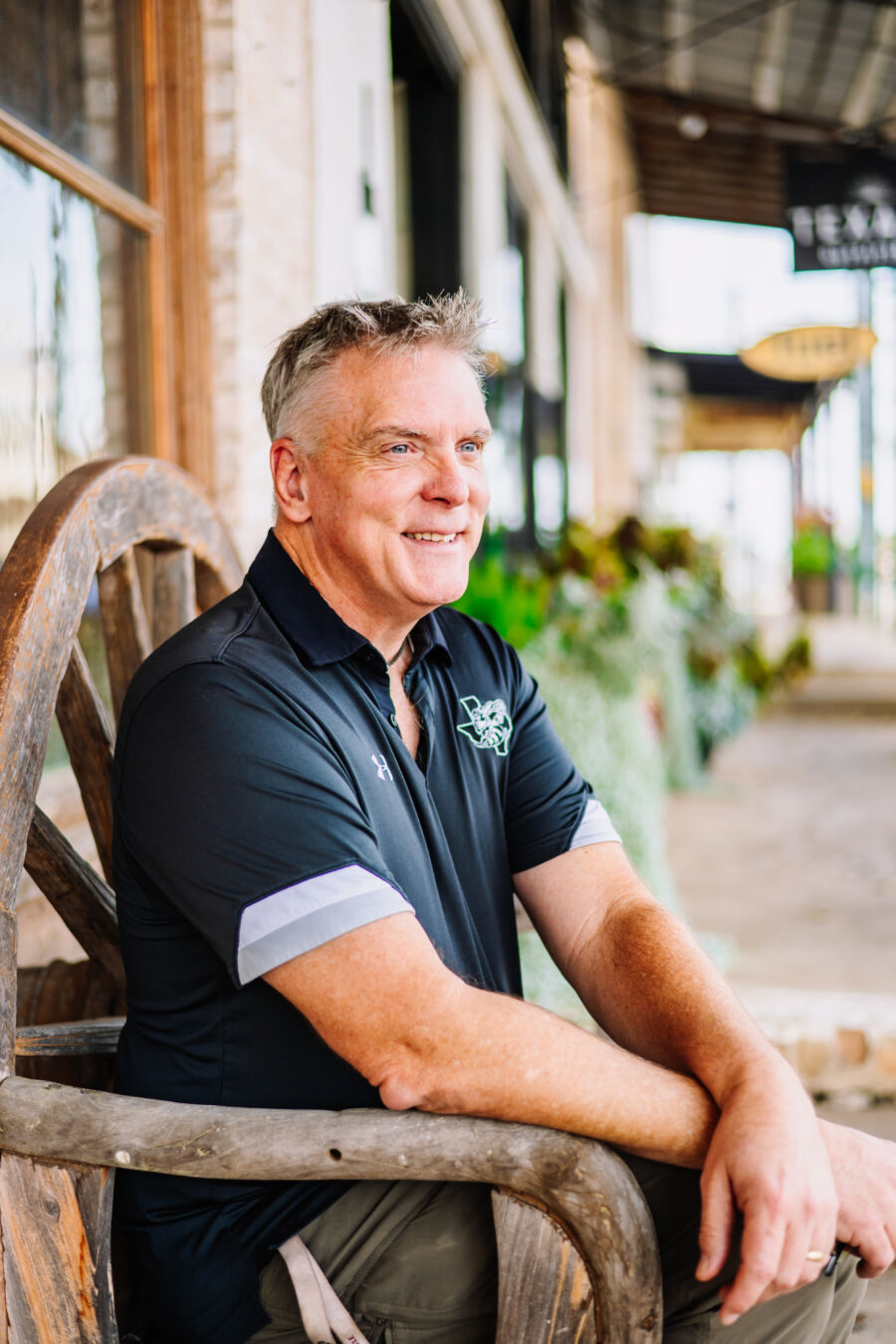
Photos by Felicia Perez, Double F Photography