Editor’s Note: This is the latest part of a series on rural Texas and the challenges that rural Texans face. Over the next year, the Associated News Service will delve into the issues facing the Lone Star State’s 177 (out of 254) rural counties.
CENTERVILLE—What Kat Wall remembers most about driving home to her family’s ranch at the height of the 2011 drought is the dust.
“I was living in Houston with my husband, but I was still helping my dad with the books,” Kat explains. “I remember driving up the freeway, and things seemed to get dryer and dryer. When I got to the entrance of the ranch, what was always lush, green grass was now dirt. It was a desert. The dust was just blowing and covering everything. We had 600 to 700 head of cattle at the time, and the drought was just beginning.”
She arrived to find her family’s ranch in real trouble.
“My dad was a cowman,” she says. “He had a lifetime of holding things together. He was the kind of man who could fix anything with bailing wire and duct tape. This wasn’t easy for him.”
Water has always been a concern to Texans—especially rural Texans, the farmers and ranchers of the Lone Star State.
“Water access is critical to ensure a prosperous future for Texas,” says Larry French of the Texas Public Policy Foundation. “Water satisfies thirsty communities, fuels industry, powers next generation technologies, sustains reliable generation of electricity, and maintains the natural beauty of the state.”
But Texas gains more than 1,000 new residents each and every day—and they’re not bringing any water with them.
“Texas’ population will increase 53% between 2030 and 2080 to 52.3 million,” French explains. “Over half that population growth will be in the planning regions that include the Dallas-Fort Worth and Houston metropolitan areas. During roughly the same time, water supplies are estimated to decrease by about 10%, mostly due to the depletion of aquifers in the High Plains.”
Geography and climate work against Texans.
“Texas faces serious challenges: multiple droughts, uneven distribution of water resources, and the high cost of securing and delivering water to meet the needs of people and their industries,” French adds. “Texas cannot afford to ignore these challenges.”
The Texas Legislature will convene in January 2027, and water policy will be at the top of the list of pressing issues. Lawmakers passed Senate Bill 7 in the 89th Legislature in 2025, but that was really just a start.
“The purpose of SB 7 was to establish comprehensive financing, administrative, and infrastructure measures to address current and projected water shortages in Texas, primarily under the Texas Water Development Board’s jurisdiction,” French says. “It aimed to improve groundwater management, facilitate innovative water solutions, and ensure that funding is directed toward high-need areas and projects.”
SB 7 was a framework for a solution, but not the solution itself.
“Ultimately, Texas needs more water,” French says. “Conservation measures and demand management of existing water resources are critical components of the plan for water security during drought, but those alone are not enough. By 2080, the draft 2027 State Water Plan projects that the state will need an additional 1.0 million acre-feet of water per year (a 6% increase from 2030) during a severe drought. Water supply—how we obtain it, pay for it, manage it, and ensure that all Texans have access to it—will be the focus of discussion among policymakers regarding the best ways to keep Texas prosperous now and through the 21st century.”
Droughts have rarely been as severe as the one Texans endured in 2011.
Record-Breaking Drought
“The year 2011 was the driest year ever for Texas, with an average of only 14.8 inches of rain statewide,” KVUE reports. “High temperatures that summer also increased evaporation, further lowering river and lake levels.”
For ranchers like the Wall family, it was a true disaster.
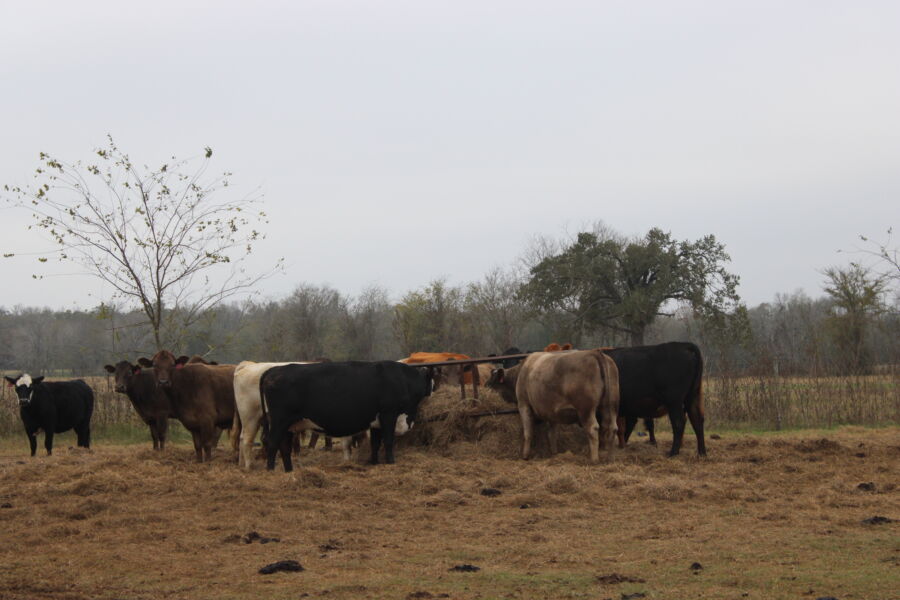
“What can you do?” Kat asks. “We sold some cows and we kept what we could. In a situation like that, everyone starts dumping their cows. When you can’t water or feed them, you take a huge loss.”
At the time, Texas AgriLife Extension Service economists put the agricultural losses at $5.2 billion.
“Livestock losses include the increased cost of feeding due to lack of pastures and ranges and market losses,” AgriLife reported. “Market losses include the impact of fewer pounds sold per calf and the impact of lower market prices due to the large number of cattle sold in a very short time period.”
For Kat Wall’s family, the losses were especially painful; like many rural Texans, her father was fiercely independent and didn’t like taking government assistance.
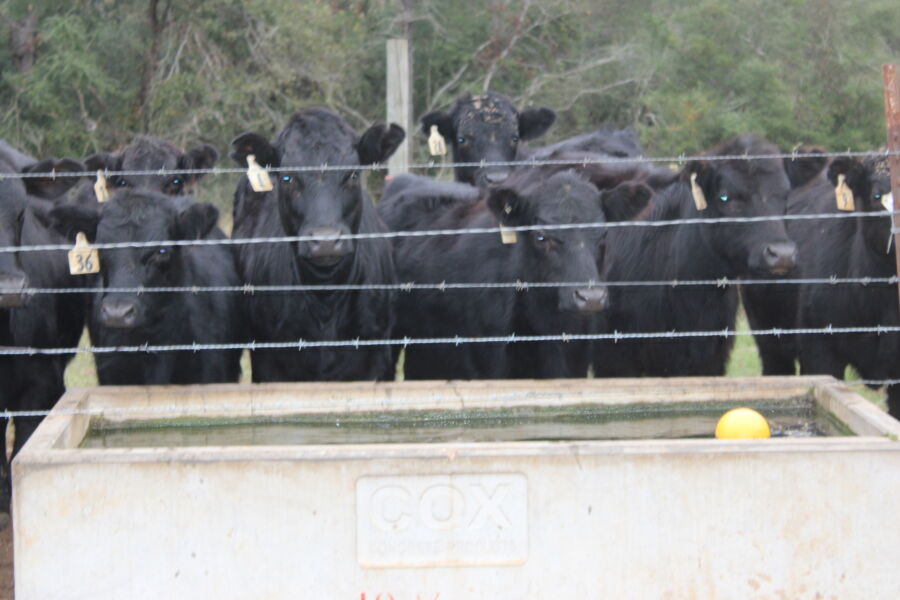
“We began shipping in hay just to keep the cows going,” she says. “Thankfully, we had our own well and watering system, so we were able to keep some of our herd. Other than that, there was nothing—the creeks were dry, the ponds were down and the stock tanks were just mud.”
And now, she worries that the drought of 2011 could become the new normal. TPPF’s Larry French agrees.
“Delivering needed water supplies for Texas is expensive, but the cost of insufficient action is much greater,” he contends.
How Texas Got Here
Historically, water has always been an issue in the region we now call Texas. Spanish explorer Cabeza de Vaca, in his travels through Texas, encountered a village of Native Americans, who fed his company of European explorers. The villagers lamented not having any corn, however, and asked the Europeans to join with them in praying for rain.
And not far from the Walls’ Leon County ranch is the town of Crockett, named not just for the famous former Tennessee legislator and Alamo defender, but also for a small water feature at the site. The Davy Crockett Spring is where Crockett stopped and camped on his way to the Alamo. Crockett is said to have chosen the campsite because the spring was easily accessible.
The most catastrophic drought in the state’s history lasted seven years, from 1950 to 1957, which led to the state finally starting to plan for future water needs.
Three Kinds of Water
There are three kinds of water resources, and different laws govern each. There’s surface water, ground water, and reuse water.
Surface water is water from rivers, streams, lakes and bays. It includes water from rain and floods. Ground water is below the surface. Reuse water comes from “domestic or municipal wastewater which has been treated to a quality suitable for beneficial use,” according to the Texas administrative code.
“Surface water is owned by Texas, while groundwater is owned by landowners and is a property right,” TPPF’s French explains. “These two ownership modes complicate Texas’ capacity to balance multiple water needs to maintain secure and sustainable water resources, to promote economic prosperity and growth, to protect private property rights, and to ensure that Texas continues to be a desirable and attractive place to live.”
Surface water is regulated by the Texas Commission on Environmental Quality (TCEQ).
“About 70% of the surface water rights are held by public river authorities, which then sell water to municipalities, water districts, and industry,” French says. “When river authorities sell water to farmers or cities, the price is usually based on the costs of moving and treating the water, not competition or market economics.”
River authorities, such as the Lower Colorado River Authority, generate their revenues through selling water, electricity, wastewater treatment and other services.
Groundwater, on the other hand, is privately owned.
“Groundwater belongs to the landowner and is governed by the common law ‘rule of capture,’ which grants landowners the right to pump groundwater beneath their property,” French says. “In the 2012 Edwards Aquifer Authority v. Day case, the Texas Supreme Court held that landowners own groundwater ‘in place’ before it is captured, and the regulation of groundwater may be subject to takings.”
The Texas Legislature created groundwater conservation districts in 1951; currently, there are nearly 100 districts, covering about 70% of the state.
Reuse water only supplies about 3.5% of the state’s water, but its role is growing. Reuse water comes in two varieties: direct (potable) use and indirect use.
“The City of San Antonio uses reclaimed water to augment stream flow in the San Antonio River along the famous River Walk,” according to the Texas Water Development Board. “The cities of Amarillo, Lakeway, Las Colinas, Lubbock, and Odessa use reclaimed water to irrigate golf courses and landscapes while Harlingen, San Angelo, Odessa, and Lubbock use it in cooling towers and for power generation.”
Water Wars
The Edwards Aquifer in (or rather, under) Central and Southwest Texas is the largest underground body of water in the state. It provides water to more than 2 million Texans.
“Historically, the cities of Uvalde, San Antonio, New Braunfels and San Marcos were founded around large springs that discharged from the Aquifer,” according to the Edwards Aquifer Authority. “As the region grew, wells were drilled into the Aquifer to supplement the water supplied by those springs.”
But the Edwards Aquifer is now in danger; in 2025, it reached record low levels.
“Rainfall in the aquifer’s recharge zone, to the north and west of San Antonio, replenishes water levels, while pumping water from the aquifer lowers it,” the San Antonio Express-News explains. “But precipitation hasn’t been nearly enough to replace the water leaving the aquifer, and water levels have triggered drought restrictions that have remained in place since spring 2022.”
Edwards and other aquifers supply about 60% of the water Texans use in an average year.
It’s not just central and west Texas worried about water. Competition for groundwater sparked a controversy in East Texas recently, when investor Kyle Bass and his company, Conservation Energy Management, sought to pump water from underneath his land in Anderson, Henderson and Houston counties to the cities and the dry areas of West Texas.
“He’s drilled test holes, hired experts, and gathered scientific data. Bass says his team could draw just a sliver of water from the aquifer — enough to make a difference for many communities in need— without breaking a single law or threatening the local water supply in any way,” the Dallas Express reports. “But some state and local officials in the counties where Bass and his company own these properties have sounded the alarm on CEM’s plan.”
It wasn’t just local officials who were alarmed.
“Community members, business owners and lawmakers all raised alarm bells because the wells would be able to pump billions of gallons from the aquifer, potentially draining their own wells,” the Texas Tribune reported last year. “Wayne-Sanderson Farms LLC, which has three complexes in East Texas, filed a lawsuit against the groundwater conservation district to stop the district from approving the application.”
That lawsuit was settled in October 2025, when a state district judge ruled that the groundwater conservation district can’t approve any applications that would result in more than 3,000 acre-feet or more, at least until the true size of the aquifer can be studied.
But Bass himself has now sued to restart the project.
Desalination
How does Texas have water issues, when it also has more than 3,300 miles of coastline? The answer is we can’t drink or irrigate with seawater. And that’s why desalination is such an important part of Texas’ water future.
There are currently 53 municipal desalination facilities in Texas, all of which treat groundwater or surface water. The combined capacity equals 157 million gallons per day. Of the 53 facilities, 16 are sourced from brackish surface water, generating a combined capacity of 65 million gallons a day.
That’s not a lot—at least, yet. And desalination has its downsides. For example, it requires a tremendous amount of energy. But Texas can look to Israel for tips on effectively using desalination.
“Desalinated drinking water makes up a mere 1% globally,” adds French. “However, desalinated water in Israel accounts for over 80% of water consumption and produces nearly 160 billion gallons of water annually.”
Wastewater
There’s a considerable “ick” factor when it comes to treating wastewater (including sewage), but it’s going to be a bigger and bigger part of the conversation.
Over in Arizona, the city of Scottsdale is running out of water, as pressure on the Colorado River increases.
“Scottsdale has recycled water for decades — using it on golf courses and to recharge groundwater — but drinking it is a different conversation. A treatment plant, near 101 and Pima Road, houses one of the most advanced water recycling systems in the country,” ABC 15 Arizona reports. “Supporters of the idea say the finished product is so thoroughly purified it’s cleaner than some bottled water. Critics, including some residents, call it ‘toilet to tap,’ arguing the public isn’t ready to accept the idea.”
But Texas already recycles wastewater, and plans to scale that up significantly.
“Texas was home to the first direct potable reuse facility in the state and nation,” the Texas Water Development Board notes. “The Colorado River Municipal Water District has operated the Raw Water Production Facility in Big Spring since 2013. There was also a temporary direct potable reuse facility in Wichita Falls in 2014-15, and two more direct potable reuse projects are currently in the works in El Paso and Liberty Hill.”
Those are just the start.
“The regional water planning groups in Texas estimated that existing supply from water reuse is projected to produce about 714,000 acre-feet of water per year by 2070, constituting a 15 percent increase,” the TWDB adds. “The increase in reuse existing supply is primarily due to an increase in wastewater flows associated with an increasing population and the capacity of existing reuse facilities.”
Rural vs. Urban Interests
At her Leon County ranch, Kat Wall warns that Texas’ cities, with their outsized influence in the Texas Legislature, will continue to press for more access to the state’s existing water supplies.
She’s right.
“As our state continues to grow, so will the demand for water — from expanding cities, new industries and water-intensive data centers,” says rancher Jay Evans, writing for the Texas & Southwestern Cattle Raisers Association. “At the same time, we must ensure rural landscapes remain productive, supplying food and fiber to sustain our economy. Cities cannot prosper without healthy working lands.”
Wall agrees. She even ran for a Texas House seat in the last election cycle. Her focus is on protecting the state’s rural areas.
“I care about rural Texas because that’s who we are,” she says. “This land has been in our family since 1871. Rural Texans produce the fiber, food, culture, natural resources, and yet they don’t have a voice.”
Photos by Richard Sirman for the Association News Service.